HomeLiving in Cabbagetown
Living in Cabbagetown, Toronto: Victorian Homes, Street Parking and Whether It Is Safe
Narrow lots, old brick, heritage rules on the front of the house and very few driveways. The neighbourhood asks a few things of the people who live in it, and gives a great deal back.
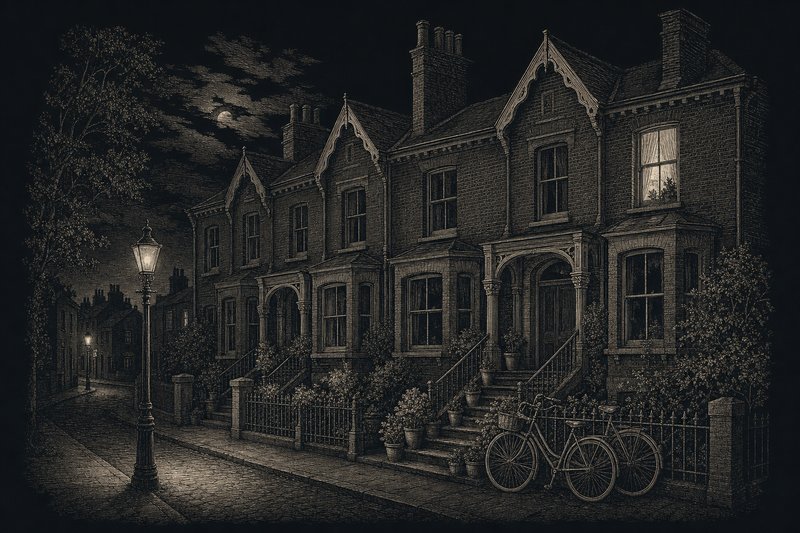
People who move into Cabbagetown homes tend to describe the same first surprise: how quiet the side streets are, a block away from Parliament Street’s buses and patios. The neighbourhood east of Parliament was built for walking, and living in Cabbagetown still works best on foot. Its houses sit close to the sidewalk, its lanes run behind the rows, and its edges are green on three sides. What follows is a practical account of the houses, the rules that come with them, parking, transit, and the question every newcomer asks sooner or later.
Cabbagetown homes: what the houses are and how they work
The typical Cabbagetown house is a Victorian row or semi-detached house on a lot that is narrow at the front and long at the back. The styles have names that residents use without thinking: bay-and-gable fronts with a projecting window and a steep gable above, the mansard roofs of Second Empire houses, and the smaller, plainer workers’ cottages tucked between them. The house-style spotter walks through telling them apart.
Cabbagetown homes were built for families who needed a lot of house on a little land, which explains their shape. Rooms stack one behind another, the stairs climb along one party wall, and the kitchen often sits at the back with a small yard beyond it. Basements were rarely built for living in; many have been dug out since. Ceilings on the main floor are usually generous, and the upper storeys get lower as they go.
Buyers should expect old-house problems as a matter of course. Brick needs repointing, original windows need care, and knob-and-tube wiring still turns up. None of this is unusual for the age of the stock, but it helps to budget for it and to find a contractor who has worked on Victorian brick before.
One small thing people notice after a few months: the front porches. On a street of houses this close together, the porch is where neighbours meet, and a well-kept porch says as much about a street as any number of restored cornices.
Living in Cabbagetown under heritage rules
Most of the neighbourhood is protected by Heritage Conservation Districts. The City of Toronto lists Cabbagetown North, designated in 2002, then Cabbagetown Northwest, Cabbagetown Metcalfe and Cabbagetown South, designated between 2002 and 2008. The newest is Cabbagetown Southwest: the Ontario Land Tribunal approved its plan on 5 December 2024, and it is now in force.
For anyone living in Cabbagetown, the practical meaning is simple to state and harder to live with. Changes to the parts of a house that can be seen from the street usually need a heritage permit. According to the City, “alterations to the interior of a structure or building are not subject to a heritage permit”, and there is no cost for a standalone heritage permit. Council has 90 days from the notice of receipt of an application to issue the permit, with or without conditions, or refuse it.
Each district has its own plan, and each plan lists minor exterior alterations that do not need a permit. That list is the first thing to read before planning any work on the front of a house. Replacing wooden windows with vinyl, removing decorative bargeboard or enclosing a porch are the kinds of changes that will be looked at carefully. The Cabbagetown Heritage Conservation District Committee reviews applications alongside City heritage staff, and it publishes a guide to the permit process on its website.
Some owners find the rules restrictive. Others point out that the rules are the reason the streets look the way they do, and that a house on a protected street is a house whose neighbours cannot tear down the view. Both views are fair. It is worth deciding which one you hold before buying.
A small side note that surprises people: the heritage districts do not cover everything within the usual idea of Cabbagetown. Parts of the area fall outside them, and the edges have moved over time. The boundary map shows how the districts sit against the streets.
The rules also shape what gets built. Walk north of Wellesley Street and the St. James Town towers show what the rest of the area was spared; inside the districts the skyline stays low, and that is one of the things that makes the streets feel like a village. For a buyer, the district plans mean the neighbourhood around a house is unlikely to change shape dramatically; for a would-be developer, they mean a long conversation with heritage staff.
Street parking and permits
Very few Cabbagetown houses have a driveway. The streets were laid out before cars, the lots are narrow, and front-yard parking is tightly controlled across the city. As a result, parking in Cabbagetown mostly means the street.
Many streets in the area use the City of Toronto’s residential on-street permit parking. A permit entitles the holder to park on the street within a specified area during permit parking hours. The City says the program generally serves residential areas where driveways and garages are not common, which describes Cabbagetown well. To apply, residents prove their address with a bank, credit card or utility bill, and someone moving into a house provides a signed letter from the owner confirming there is no on-site parking. To renew, the driver’s licence and vehicle registration must match the permit address.
Visitors are the other half of the story. The City sells temporary on-street permits online, and residents who host often keep a few in hand. Rules, fees and hours differ from street to street, so read the signs at each end of the block; what worked on the next street may not apply.
Plenty of residents have given up the car altogether. Bikes live in back lanes and front halls, and the walk to the subway is short.
Transit and getting around
The 506 Carlton streetcar is the neighbourhood’s spine. It runs along Carlton Street and uses the short stretch of Parliament Street between Carlton and Gerrard. The 65 Parliament bus covers the whole of Parliament Street from Lake Shore Boulevard to Bloor Street, and it and the 94 Wellesley bus both run to Castle Frank station on Line 2 Bloor–Danforth. From most houses, a subway station is a walk or one short ride away.
Track work on Carlton and Parliament has diverted the streetcar more than once in recent years, so check the TTC’s service advisories before relying on a route. Cycling is popular, helped by the lanes and quiet side streets, though the hills down into the Don Valley are steeper than they look on a map.
Is it safe? How to judge Cabbagetown honestly
People ask “is Cabbagetown Toronto safe” more than almost any other question about the area, and the answer depends on what the asker means. Cabbagetown is a dense, lived-in downtown neighbourhood beside some of the city’s busiest streets. It has the same concerns as any comparable part of downtown: bicycles stolen from porches, cars broken into overnight, and the occasional incident on Parliament Street, where people from several surrounding areas pass through.
Reputation and a realtor’s reassurance are no substitute: the reliable way to answer “is Cabbagetown Toronto safe” is to look at the numbers yourself. The Toronto Police Service publishes a Public Safety Data Portal with neighbourhood crime rates per 100,000 residents for assault, auto theft, bike theft, break and enter, robbery, theft over, homicide, shootings and theft from motor vehicles, plus a map of reported occurrences. The police note that locations are offset to the nearest intersection to protect privacy, so read the map at street level, not house by house. Cabbagetown falls within the Cabbagetown-South St. James Town neighbourhood in that data, which also includes the high-rise blocks to the north, so compare several years and look at individual streets on the map.
The rest is ordinary city sense. Lock bikes to something solid, keep valuables out of parked cars, and walk the streets you are thinking of living on at ten at night as well as at noon.
Daily life: shops, parks and neighbours
Parliament Street does the work of a village high street. Between Gerrard and Wellesley it has a butcher, a gourmet grocer, cafés, pubs and restaurants, several of them in business for decades. The restaurant guide lists places confirmed as trading in September 2026. Older business directories for the neighbourhood also listed a laundromat under the patch name, the Village Cabbagepatch Laundromat, sometimes given as the Carlton Cabbagepatch Laundromat. Those listings are years old, so check a current map before carrying a bag of washing over.
Green space is the neighbourhood’s great luxury. Riverdale Park West and Riverdale Farm lie on the eastern edge, the farmers’ market runs there on Tuesday afternoons through the growing season, and Allan Gardens is a short walk to the west. The two historic cemeteries, the Necropolis and St. James, add long quiet walks under old trees.
Community life runs through the residents’ and preservation associations, the heritage district committee, and above all the Cabbagetown Festival each September, when Parliament and Carlton streets close to traffic for a weekend. The seasonal guide follows the neighbourhood through the year, and the history page explains how a district of labourers’ cottages became one of Toronto’s most protected streetscapes.
Living in Cabbagetown also means sharing the sidewalk with visitors: walking groups, festival crowds and people photographing front doors. That is the price of a street worth looking at, and on a September weekend the whole neighbourhood seems to be out on its porches watching them go by.
Questions
What are Cabbagetown homes like inside?
Most Cabbagetown homes are narrow Victorian row or semi-detached houses on deep, slim lots, usually two or three storeys with the rooms stacked front to back. Interiors vary enormously, because the heritage rules cover the street face and not the inside, so one house may keep its plaster mouldings while the next has been opened up completely.
Do I need a heritage permit to renovate a house in Cabbagetown?
For work on the parts of the house visible from the street, usually yes, if the property sits inside one of the Cabbagetown Heritage Conservation Districts. The City of Toronto states that interior alterations are not subject to a heritage permit, and each district plan lists minor exterior work that is exempt. Check the plan for your district before ordering windows or a new porch.
How much does a heritage permit cost?
The City of Toronto says there is no cost for a standalone heritage permit. A building permit for structural work is a separate application with its own fee. Once the City confirms it has received a heritage application, Council has up to 90 days to decide on it.
Which heritage districts cover Cabbagetown?
The City lists Cabbagetown North (designated in 2002), Cabbagetown Northwest, Cabbagetown Metcalfe and Cabbagetown South (designated between 2002 and 2008), and Cabbagetown Southwest, whose plan came into force after Ontario Land Tribunal approval in December 2024. The boundary map shows roughly where each one sits.
Is Cabbagetown Toronto safe?
It is a busy, lived-in downtown neighbourhood with the ordinary mix of city concerns: bike theft, car break-ins and the occasional incident on the main streets. The honest way to judge it is the Toronto Police Service Public Safety Data Portal, which publishes crime rates by neighbourhood per 100,000 residents. Walk the streets you are considering at night as well as by day.
Can I park on the street in Cabbagetown?
Many streets in the area run residential permit parking, because most houses were built long before cars and have no driveway. A permit lets the holder park on the street in a specified area during permit hours. The City of Toronto handles applications and asks for proof of address, and it also sells temporary permits for visitors.
How do people get around without a car?
The 506 Carlton streetcar crosses the neighbourhood along Carlton Street and uses Parliament Street between Carlton and Gerrard. The 65 Parliament bus runs the length of Parliament Street, and it and the 94 Wellesley bus connect to Castle Frank station on Line 2. Service changes during track work, so check the TTC's service advisories.
Where do residents buy groceries and eat out?
Parliament Street is the local high street, with a butcher, a gourmet grocer, cafés and restaurants between Gerrard and Wellesley. The restaurant guide covers places checked as trading in September 2026. On Tuesdays from late spring to autumn the farmers' market in Riverdale Park West adds fresh produce.
Are there parks close to home?
Few downtown neighbourhoods do better. Riverdale Park West and Riverdale Farm sit on the eastern edge, Wellesley Park is tucked into the north-east corner, and Allan Gardens is a short walk west. The places guide has a page for each.
Can I change the paint colour or front garden of a heritage house?
Paint and planting are the questions neighbours ask most, and the answer depends on the district plan. Many minor changes are exempt, while work on historic features such as windows, doors, porches and bargeboard generally needs a permit. The Cabbagetown Heritage Conservation District Committee and the City's heritage planners are the right people to ask.